

Program Lifecycle
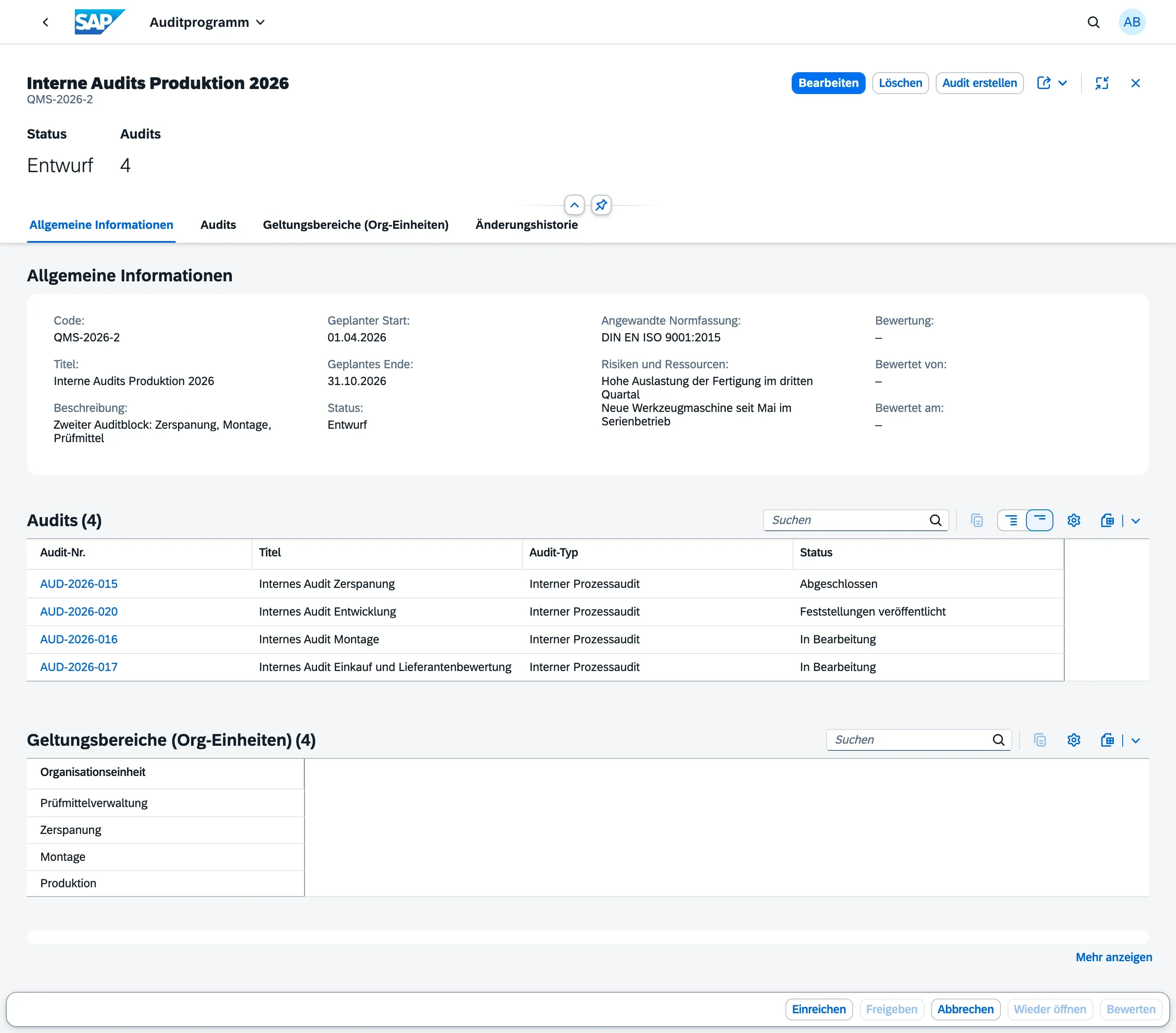
Audit Programs follow their own status flow — independent of the lifecycle of the audits inside them.
| Status | Meaning |
|---|---|
| Draft | Program is being planned; org units and dates can be adjusted |
| Submitted | Program has been submitted for approval |
| Released | Program is officially released; audits are being executed |
| Evaluated | Program has been reviewed after completion — see Evaluating a Program |
| Cancelled | Program was abandoned |
Allowed Transitions
Section titled “Allowed Transitions”| Action | From | To |
|---|---|---|
| Submit (Einreichen) | Draft | Submitted |
| Release (Freigeben) | Submitted | Released |
| Evaluate (Bewerten) | Released | Evaluated |
| Cancel (Abbrechen) | Draft | Cancelled |
| Reopen (Wieder öffnen) | Released | Draft |
Who Can Submit and Release a Program
Section titled “Who Can Submit and Release a Program”Submit and Release are restricted to the Audit Manager role. An Auditor can view a program, add audits to it, cancel a draft, or reopen a released program, but cannot submit it for approval or release it.
This separation reflects ISO 19011:2018, 5.3.2 and the independence principle (clause 4): the decision to approve and release the annual program — including its resourcing and scope — is a planning and governance responsibility, kept separate from the auditors who go on to conduct the audits within that program. Without this separation, a single Auditor could plan, execute, and self-approve their own audit program, undermining the objectivity the standard requires.
Next Steps
Section titled “Next Steps”- Evaluating a Program — the final transition and what it requires
- Roles & Permissions — who may do what across the system